
Erlangen / Genf (kobinet)
Die UNO ist eine Gruppe von Ländern.
Vereinte Nationen ist ein anderer Name dafür.
Die Länder arbeiten zusammen.
Sie wollen Frieden für alle Menschen.
Sie wollen Gerechtigkeit für alle Menschen.
Die Länder machen ein Treffen.
Das Treffen ist vom 26. bis 30. Oktober 2026.
Die Länder sprechen über ein Abkommen.
Viele Länder beschließen etwas gemeinsam.
Alle halten sich an die Regeln.
Das Abkommen soll ältere Menschen schützen.
Es soll ihre Rechte schützen.
Menschen mit Behinderung finden das wichtig.
Einige machen bei den Gesprächen mit.
Diese Menschen heißen:
- Prof. Dr. Theresia Degener
- Dr. Sigrid Arnade
- Dinah Radtke
Die drei Frauen haben ein Video gemacht.
Das Video ist über das Abkommen.
Das Video ist auf Englisch.
Man kann es auf YouTube sehen.
Die Frauen arbeiten für eine Gruppe.
Die Gruppe heißt: Disabled Persons International.
Das ist eine internationale Organisation.
Menschen mit Behinderung arbeiten dort zusammen.
Prof. Dr. Theresia Degener, Dr. Sigrid Arnade und Dinah Radtke sagen:
Ältere Menschen sind nicht nur krank.
Sie haben Rechte.
Die Rechte sind wie bei Menschen mit Behinderung.
Die Frauen fordern Regeln.
Die Regeln sollen Benachteiligung stoppen.
Jemand wird schlechter behandelt.
Das ist nicht fair.
Die Regeln sollen für ältere Menschen gelten.
Das steht im Video
Die Frauen sprechen über wichtige Punkte.
Zum Beispiel:
Was ist Benachteiligung?
Die Frauen sagen:
Das Abkommen soll Benachteiligung verbieten.
Es soll verbieten, dass Menschen keine Hilfe bekommen.
Diese Hilfe heißt: Angemessene Vorkehrungen.
Das sind besondere Hilfen.
Zum Beispiel: Eine Rampe für Roll-Stuhl-Fahrer.
Allgemeine Pflichten
Dinge, die alle Länder tun müssen.
Prof. Dr. Theresia Degener, Dr. Sigrid Arnade und Dinah Radtke sagen:
Das Abkommen soll für alle Menschen gelten.
Es gilt für ältere Menschen.
Es gilt für Menschen mit Behinderung.
Es gilt für Frauen und Männer.
Es gilt für Menschen mit anderer Haut-Farbe.
Es gilt für Menschen mit wenig Geld.
Recht auf Selbst-Bestimmung
Jeder darf selbst entscheiden.
Ältere Menschen dürfen selbst entscheiden.
Auch wenn sie Hilfe brauchen.
Niemand darf ihnen das Recht wegnehmen.
Pflege
Hilfe für Menschen, die nicht alles allein können.
Zum Beispiel beim Waschen oder Anziehen.
Ältere Menschen dürfen selbst wählen.
Sie dürfen entscheiden, wo sie leben.
Sie dürfen entscheiden, mit wem sie leben.
Sie sollen passende Hilfe bekommen.
Niemand darf sie in Heime zwingen.
Die Frauen hoffen:
Das Abkommen soll über neue Themen sprechen.
Zum Beispiel über Künstliche Intelligenz.
Computer, die wie Menschen denken können.
Und über Klima-Wandel.
Das Wetter auf der Erde verändert sich.
Es wird wärmer als früher.
Hier könnt ihr das Video sehen:
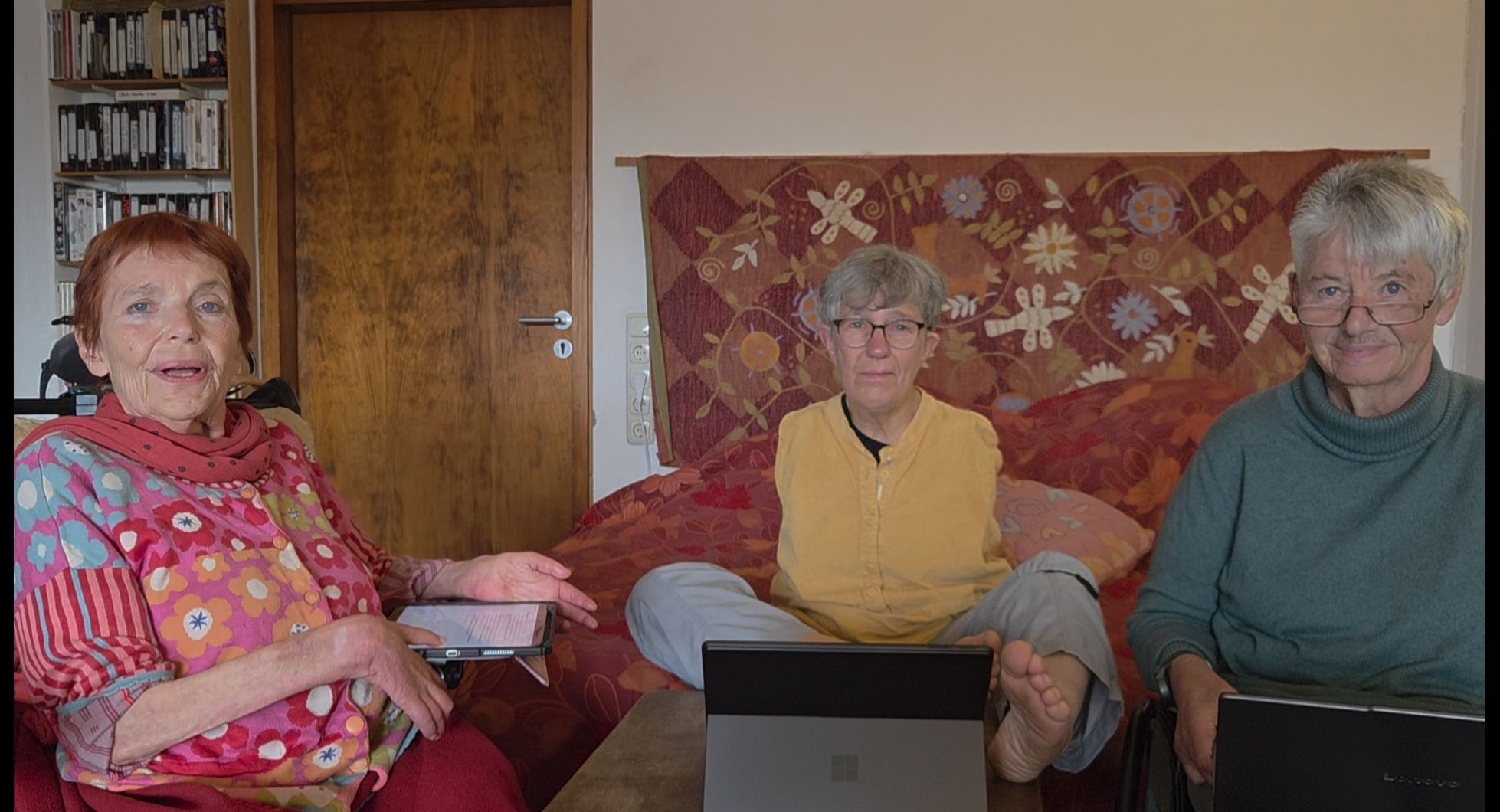
Foto: H.-Günter Heiden
Erlangen / Genf (kobinet)
Bei den Vereinten Nationen in Genf findet derzeit vom 26. - 30. Oktober 2026 der zweite Beratungszyklus für die Entwicklung einer Menschenrechtskonvention für die Rechte älterer Menschen statt. In die Beratungen dieses auch aus Sicht behinderter Menschen wichtigen Prozesses haben sich auch menschenrechtserfahrene Akteur*innen der Behindertenbewegung eingeklinkt. Prof. Dr. Theresia Degener, Dr. Sigrid Arnade und Dinah Radtke haben im Vorfeld der derzeitigen Beratungen ein Videostatement zu einzelnen Fragen der Konventionsentwicklung entwickelt und für die Ausstrahlung in Genf eingereicht, das nun auch - leider nur in englischer Sprache - auf dem YouTube-Kanal der Interessenvertretung Selbstbestimmt Leben in Deutschland (ISL) eingestellt wurde. U.a. fordern die deutschen Vertreter*innen über ihre Dachorganisation Disabled Persons International eine Abkehr vom medizinisch orientierten Modell des Alters hin zu einer menschenrechtsbasierten Orientierung. Zudem plädieren sie auch für die Verankerung angemessener Vorkehrungen zur Überwindung von Diskriminierungen älterer Menschen.
Im Folgenden dokumentieren die kobinet-nachrichten das Statement in englischer Sprache:
Video-Statement by DPI-Germany regarding the Second Session of IGWG – October 2026: Definitions, General obligations, Catalogue of Rights.
Speakers in the order in which they occur: Prof. Dr. Theresia Degener, Dr. Sigrid Arnade, Dinah Radtke
Dear chairs, distinguished members of the Intergovernmental Working Group!
On behalf of DPI, Disabled Persons International, and as former members of the drafting body of CRPD, the Convention on the Rights of Persons with Disabilities, and as former chair of the CRPD Committee we would like to make the following contribution:
As disabled women over 60 we think it is important that the medical model of age needs to be replaced by a human rights model of age just like the CRPD did to disability.
Regarding the article on definitions we think it is of a utmost importance that the CRPD definition of discrimination is adopted including denial of reasonable accommodation. Denial of reasonable accommodation needs to be defined on the basis of Art. 2 CRPD and applied to age. Historically denial of reasonable accommodation stems from legislation addressing religious discrimination which is evidence that it is not by nature disability related.
With regard to the article on general obligations we think it is important that intersectionality is included as a cross cutting aspect to all rights, not only with respect to age and disability but also regarding gender, sexual identity, ethnic background, class and other dimensions.
Regarding legal capacity we urge to build upon Art. 12 CRPD and codify legal capacity as a human right which is not dependent on corporal or mental decision making standards. Legal capacity is a right which must not be denied or restricted on the basis of impairment nor age, but must be respected, protected and fulfilled by non-discriminatory systems including supported decision making.
Regarding long term care we emphasize the importance of the right to independent living as enshrined in article 19 CRPD. Old persons need to have the right to choose where and with whom to live, they have a right to long term senior specific services and a right to general community services which are free of barriers and age-sensitive. Older persons must be protected not to be forced to live in institutions.
We are also hopeful that a future old age convention will address unfinished human rights issues, the CRPD could not address, notable Artificial Intelligence and Climate crisis.
Thank you very much for your attention!


Lesermeinungen